
Market Intelligence
An eCommerce brand replaced gut-feel category decisions with a real-time market signal engine
Category managers were making merchandising and pricing calls on incomplete information — competitor moves, regional demand shifts, and emerging product trends arrived too late to act on. Innovatics built a structured signal pipeline that turns competitor and market activity into decisions the category team can make daily.
Outcomes
The Impact
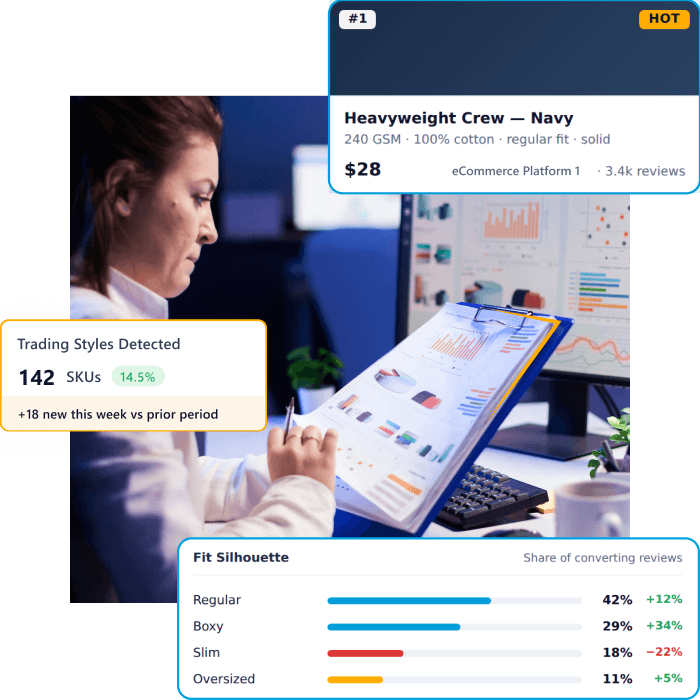
The headline metrics. Each one sustained — not a launch spike. The deeper change is in how the team works, not just what it ships.
Decisions made on stale, partial information.
The category team had decent first-party data — sales, inventory, returns. What they didn't have was visibility into the market around them. Three specific gaps surfaced when we mapped their actual decision cadence:
- Competitor pricing tracked manually in spreadsheets, refreshed weekly. Coverage was thin and the lag meant pricing reacted to last week's market.
- Trends spotted late — usually after sales data or a competitor's stockout made them obvious. Buying into trends as they peaked, not before.
- Dead-stock risk visible only in the P&L — after the quarter closed, never before.
What we built
A signal pipeline, not a dashboard.
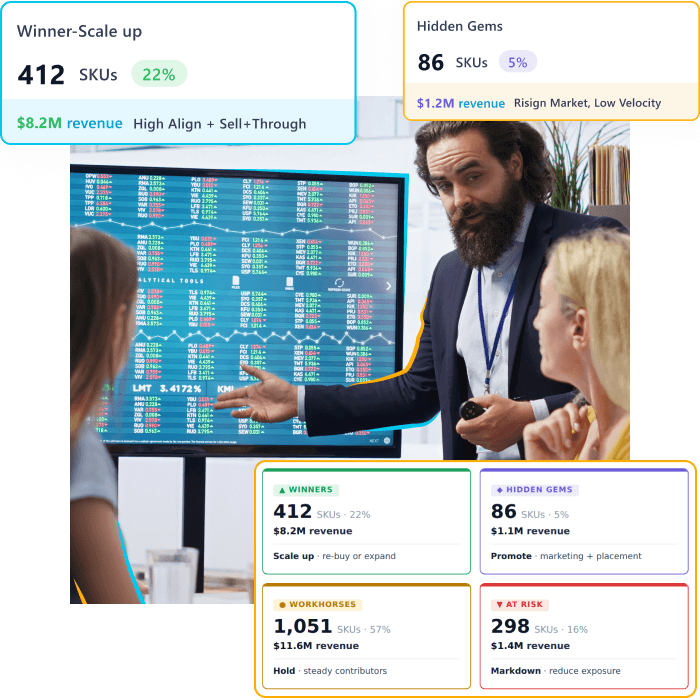
The goal wasn't “show competitor data on a dashboard.” It was “flag the three pricing actions worth taking this week, with the evidence next to each one.”
The team didn't need a smarter analyst — it needed market signal flowing into its workflow at decision speed. So we worked backwards from the team's existing rituals: a weekly pricing review, a fortnightly assortment review, a monthly dead-stock risk review. Each one became a destination for a specific signal layer.
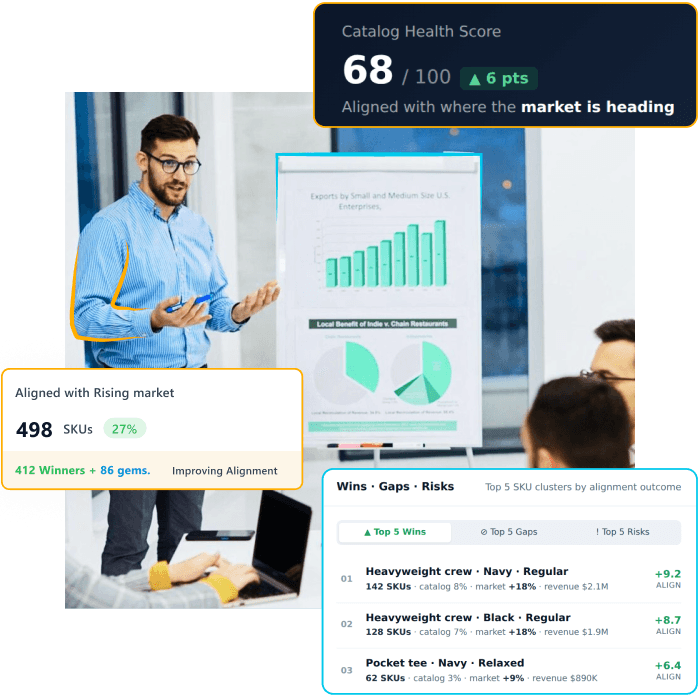
Three stages, daily refresh, exception alerts for time-sensitive moves like sudden competitor stockouts.
Technology stack
What we used.
Chosen to match the client's existing comfort zone — they're a Microsoft and Power BI shop — and to keep operational overhead low post-handover.
Ingestion
Storage
Modeling
Surfacing
How the team works now
The numbers tell half the story. The other half: how they got there.
- Pricing decisions run weekly, not monthly. A standing 90-minute review where the dashboard surfaces 5-10 SKUs whose competitor pricing has shifted, and decisions get made in the room.
- Trends get caught 2-4 weeks earlier. The products-to-watch list catches emerging signals before they show up in sales data — long enough to adjust stocking, not just react.
- Dead-stock risk flagged six weeks out. SKUs with softening review velocity, declining competitor pricing, or weakening search signals get attention before they sit.
- Category meetings shifted shape. Agenda built around dashboard-flagged items. Decisions recorded against the signal that triggered them. Feedback loop refines the model.
The deeper return
A category team that now decides on signal, not instinct.
From the engagement summary
More cases
Other engagements worth your time.
Retail
eCommerce | eCommerce Brand Uses Affiliate Performance Dashboards to Boost Sales and Optimize Marketing Strategies
Retail
A retailer used customer cohort analysis to cut churn and grow repeat purchase rate by 28%
Talk to us
Working on a similar decision-execution gap?
If something here landed — the kind of signal you wish your team had, the cadence you wish you ran — talk to a senior team member. No pitch deck. Just a discussion about what you're trying to figure out, build, or change.