
AI & Machine Learning · Compliance Automation
Compliagence: AI-Powered Compliance Automation, Grounded in a Knowledge Graph
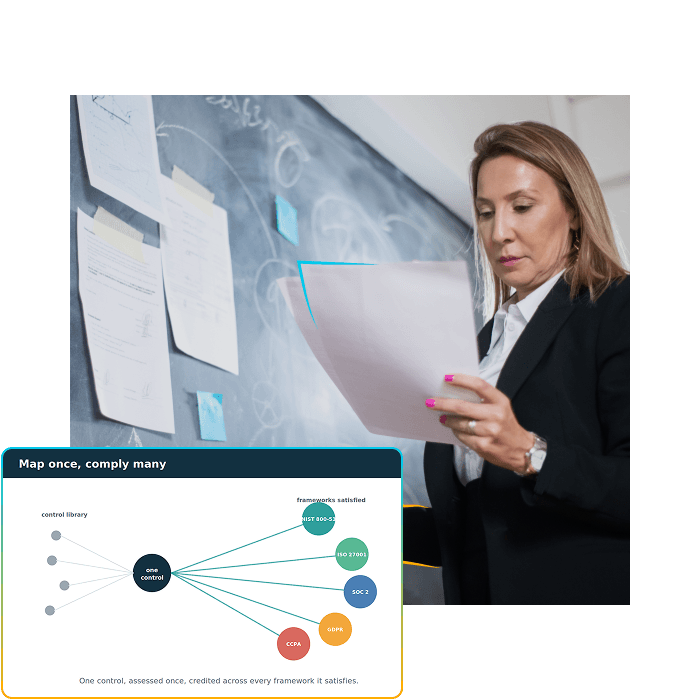
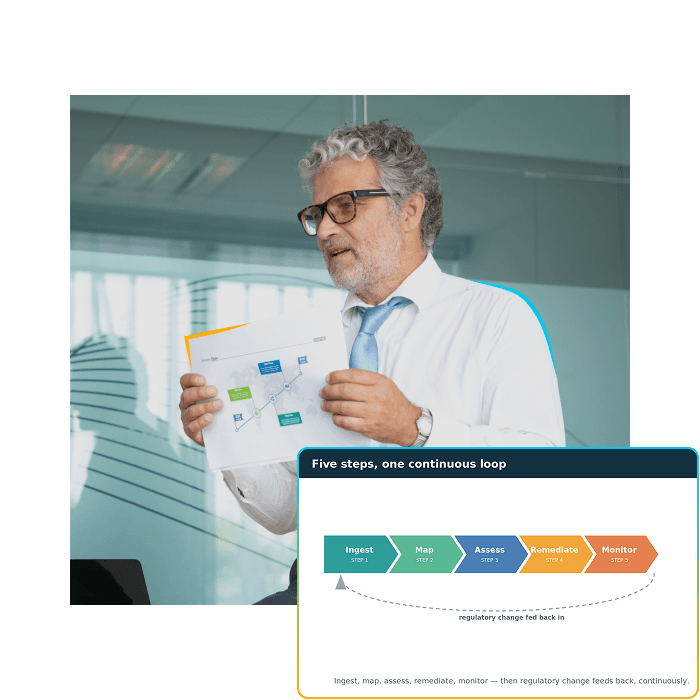
We turned a slow, manual, spreadsheet-bound compliance process into a continuous, connected, and defensible one. A client with a large control library faced weeks of manual specialist effort per framework, inconsistent verdicts, and no reuse across standards. Innovatics built Compliagence, a knowledge-graph-grounded platform that maps controls once, assesses across every framework they touch, turns gaps into reviewable playbooks, and monitors regulatory change continuously.
Outcome
The Outcome
From manual, single-framework audits to continuous, multi-framework assurance, where the same control library now answers many standards at once.
The Challenge
The Challenge
The client faced a scaling problem disguised as a documentation task: a large control library, several frameworks, and limited specialist headcount. Each framework consumed weeks of scarce expert effort, and every cycle started largely from scratch. Results were inconsistent, with two reviewers or two runs reaching different verdicts on the same control, undermining audit confidence. There was no reuse, so work completed for one framework did not carry to the next and effort multiplied by every standard in scope. Meanwhile, regulatory updates arrived faster than the team could re-assess, leaving compliance posture perpetually out of date.
Our Solution
Our Solution
Innovatics built Compliagence on a knowledge graph rather than a chatbot. Frameworks, requirements, and the client's controls are modeled as connected data, so every verdict anchors to a specific requirement and results stay consistent and explainable. The graph grounding turns a general-purpose AI into a domain-aware auditor delivering traceable, audit-defensible output with map-once, comply-many economics. The platform runs the full lifecycle in one place: gap assessments with Compliant, Partial, and Not Applicable verdicts, prioritized remediation playbooks, automated regulatory digest reports, dashboards with audit-ready exports, multi-framework crosswalk, and multi-tenant role-based workspaces. New standards onboard via adapters without rebuilding the engine.

Technology Stack
What We Used
React, Vite, Redux Toolkit and MUI on the frontend; Django REST, FastAPI, GPT-4o, embeddings and MLflow for AI; Neo4j, PGvector, PostgreSQL and Redis for data; Google Cloud, GKE, Helm and Celery for infrastructure.
The Dashboard in Action
The Dashboard in Action
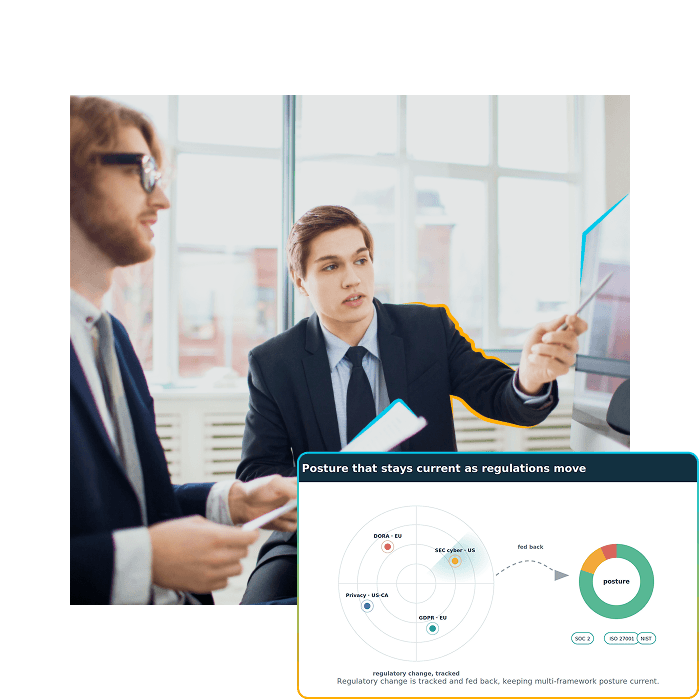
The platform gives compliance teams posture at a glance and evidence on demand. Gap Assessments mark each control Compliant, Partial, or Not Applicable against its mapped requirements, with a plain-language gap summary and suggested remediation attached to every finding. Playbooks turn those findings into an ordered plan with owners and priorities, approved line-by-line or in bulk before anything exports. Regulatory Digest Reports track change continuously per framework and jurisdiction, feeding new rules back into posture. Cross-framework dashboards show coverage and gaps in one view, track progress as remediation lands, and produce board-ready and audit-ready exports.
Closing Statement
Innovatics replaced a spreadsheet-per-framework audit cycle with a knowledge-graph platform that maps controls once, answers many standards at once, and keeps posture current as regulations move.
From the engagement summary
More cases
Other engagements worth your time.
An eCommerce brand replaced gut-feel category decisions with a real-time market signal engine
Attribution Intelligence
eCommerce | eCommerce Brand Uses Affiliate Performance Dashboards to Boost Sales and Optimize Marketing Strategies
Talk to us
Building a graph-grounded compliance workflow?
If something here landed — map-once/comply-many, traceable verdicts, continuous regulatory monitoring — talk to a senior team member. No pitch deck. Just a discussion about what you're trying to figure out, build, or change.